From the Workshop: How a Leather Pad Is Made
Step inside our workshop and follow the journey from raw hide to finished product — every cut, edge, and burnish.
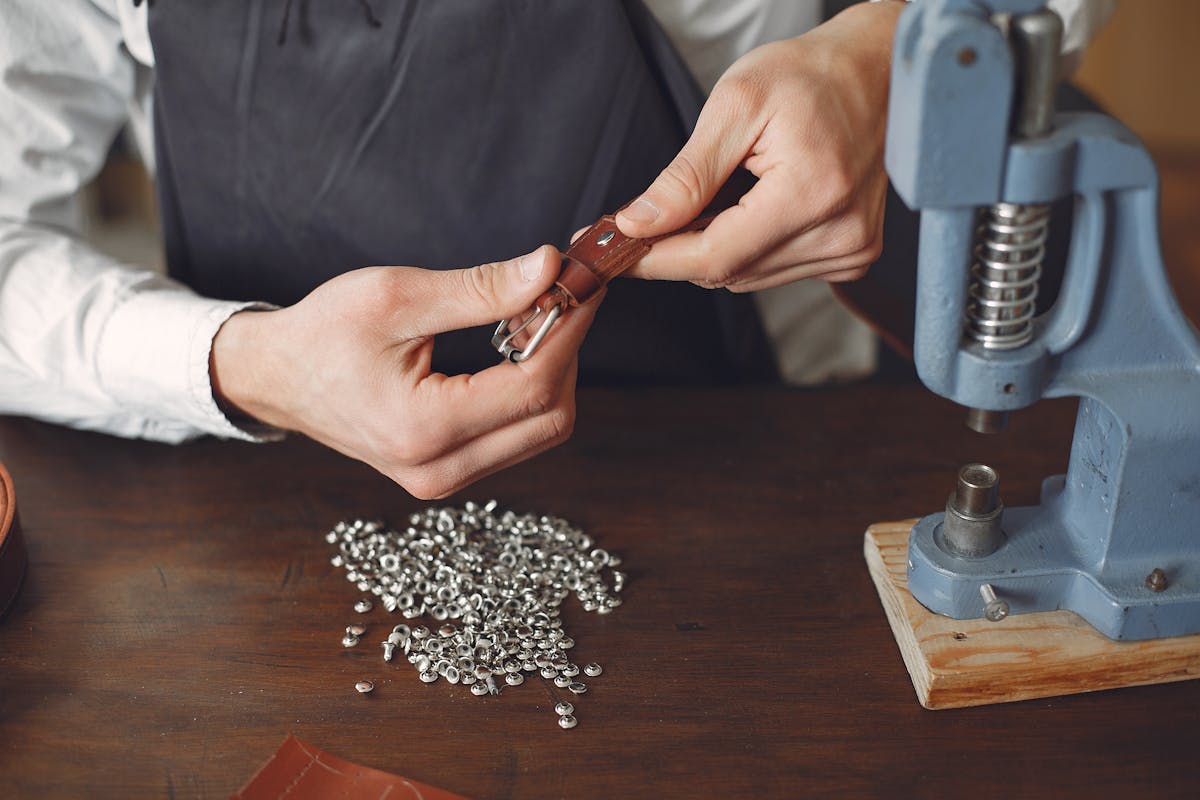
Where It All Begins
Every pad starts with selecting the leather. We work with small European tanneries that process hides using traditional methods — vegetable tanning that takes weeks, not the hours of a chrome process.
The result is leather with natural character. You can see fine veins, subtle color variations, and the occasional crease. These aren’t defects — they’re proof you’re holding a natural material.
Cutting and Preparation
From a large leather panel, we select the best sections. Every piece is carefully inspected:
- Thickness — must be consistent across the entire surface.
- Grain — we look for a fine, tight grain pattern.
- Color — naturally rich, without noticeable blemishes.
We cut by hand using steel templates and a sharp craft knife. Machine cutting would be faster, but it doesn’t give the same control over quality.
“Every cut is a decision. A bad cut can’t be undone — and that’s precisely what makes the craft honest.”
Edge Finishing
Edges are what separate a handcrafted piece from an industrial one. For each edge, we:
- Bevel it at an angle using a specialized tool.
- Dampen and smooth it with friction.
- Apply natural wax.
- Burnish with a wooden slicker until the edge develops a silky sheen.
We repeat this process two to three times depending on the leather type. The result is an edge that’s smooth to the touch and resistant to wear.
Engraving
When a customer requests engraving, we use a hot-stamping technique. A brass type is heated to a precise temperature and pressed into the leather. The result is permanent and becomes even more pronounced over time as the surrounding leather develops patina.
Final Inspection
Before packaging, every pad goes through a final check. We inspect flatness, edge quality, color consistency, and overall feel. Each piece must meet our standard — otherwise, it doesn’t leave the workshop.
It’s not the fastest way to make things. But it’s the right one.